
Thoreau Perfected
A review of the film, "The New Peasants."

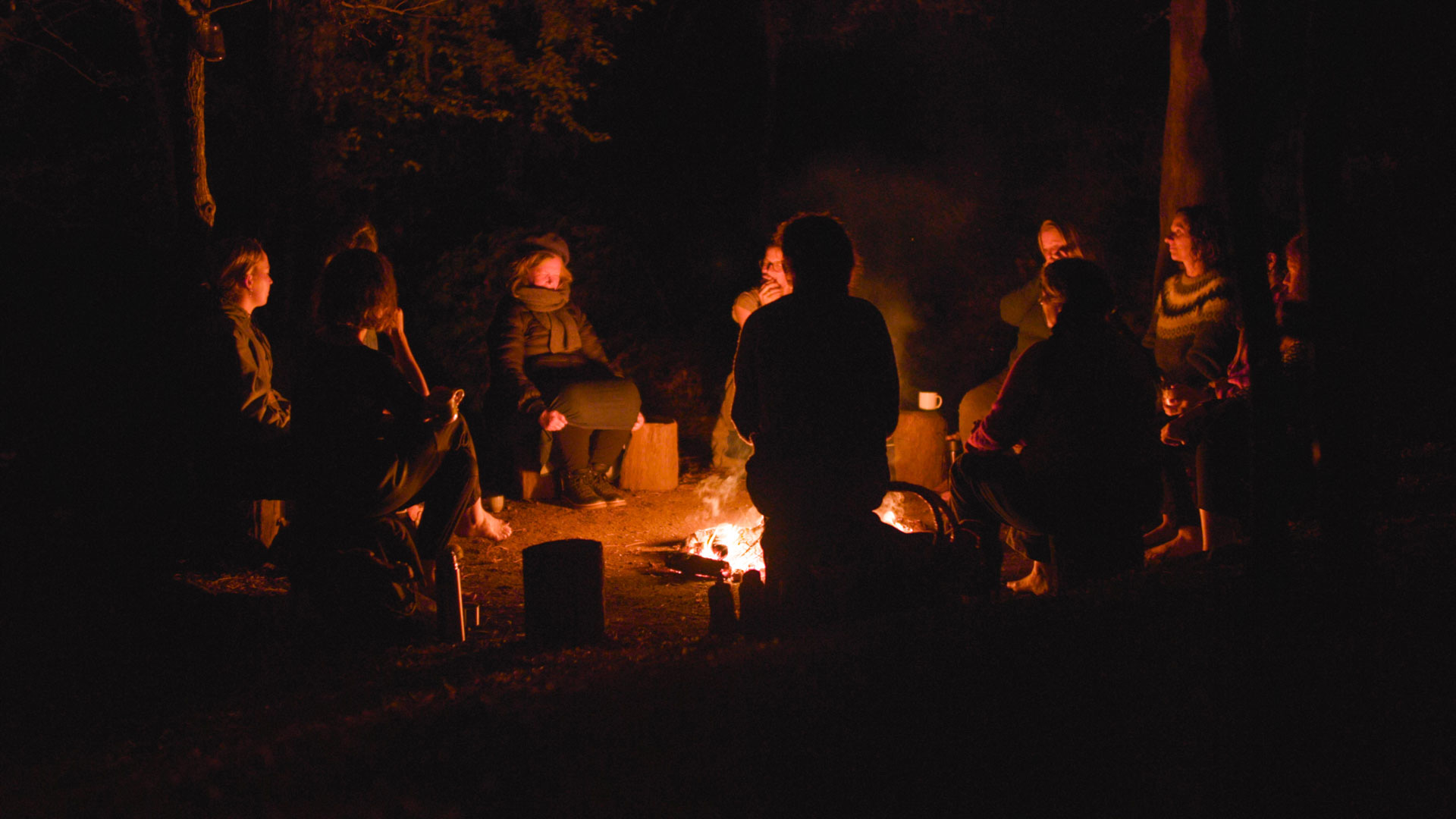
The New Peasants (Happen Films, now Folklore Pictures, 2025) is an award-winning Australian documentary directed by Jordan Osmond. It is about the lives of Patrick Jones, Meg Ulman, and their family. They write as Artist as Family on Substack. I first connected with them several years ago and have been following them since, exchanging messages now and then.
They live in Daylesford, Australia, and practice what they call “permacultural neopeasantry”. In the film we see them chopping wood, hunting rabbit, gardening, killing a chicken, fermenting, preparing food stuffs, educating/de-schooling their son, and playing.
The cinematography is beautiful throughout and all the details of a neopeasant way of life built around minimal use of fossil fuels are fascinating.
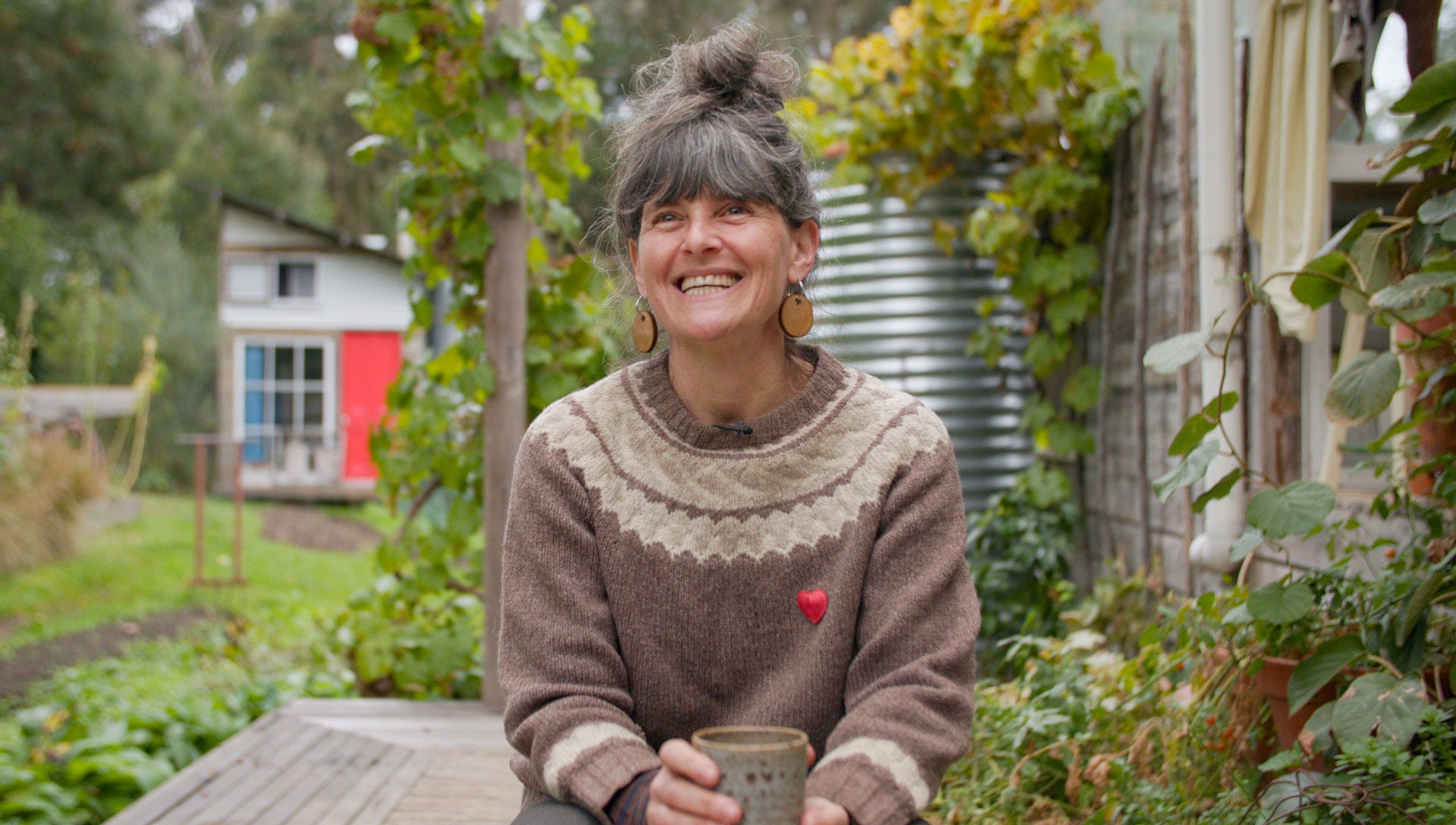
Meg
We also get insight into the family and local community dynamics. While their son Woody seems to be thriving, there is a subplot centered around Patrick’s older son Zephyr who has experienced legal problems since age 15 (including being incarcerated for breaking COVID curfew after he was released on earlier infractions). This adds depth and complexity to the overall story and the family was brave to share the less idyllic aspects of their lives with the filmmaker and us, the audience. It also touches on some of the costs they have paid for their countercultural values and way of life.
Here I’d like to focus in on their story from a particular angle. I watched the film for the first time recently. In fact, I watched it while sharing it with my students. We were honored to have the family Zoom in with us to discuss their lives and take questions after viewing the movie. My students were strongly engaged and at least some were pretty jazzed following it.
I’ve also been rereading some Henry David Thoreau lately and struggling with him as I always do. There’s a lot in Thoreau to admire and Walden is, in my opinion, one of the best books written by an American.
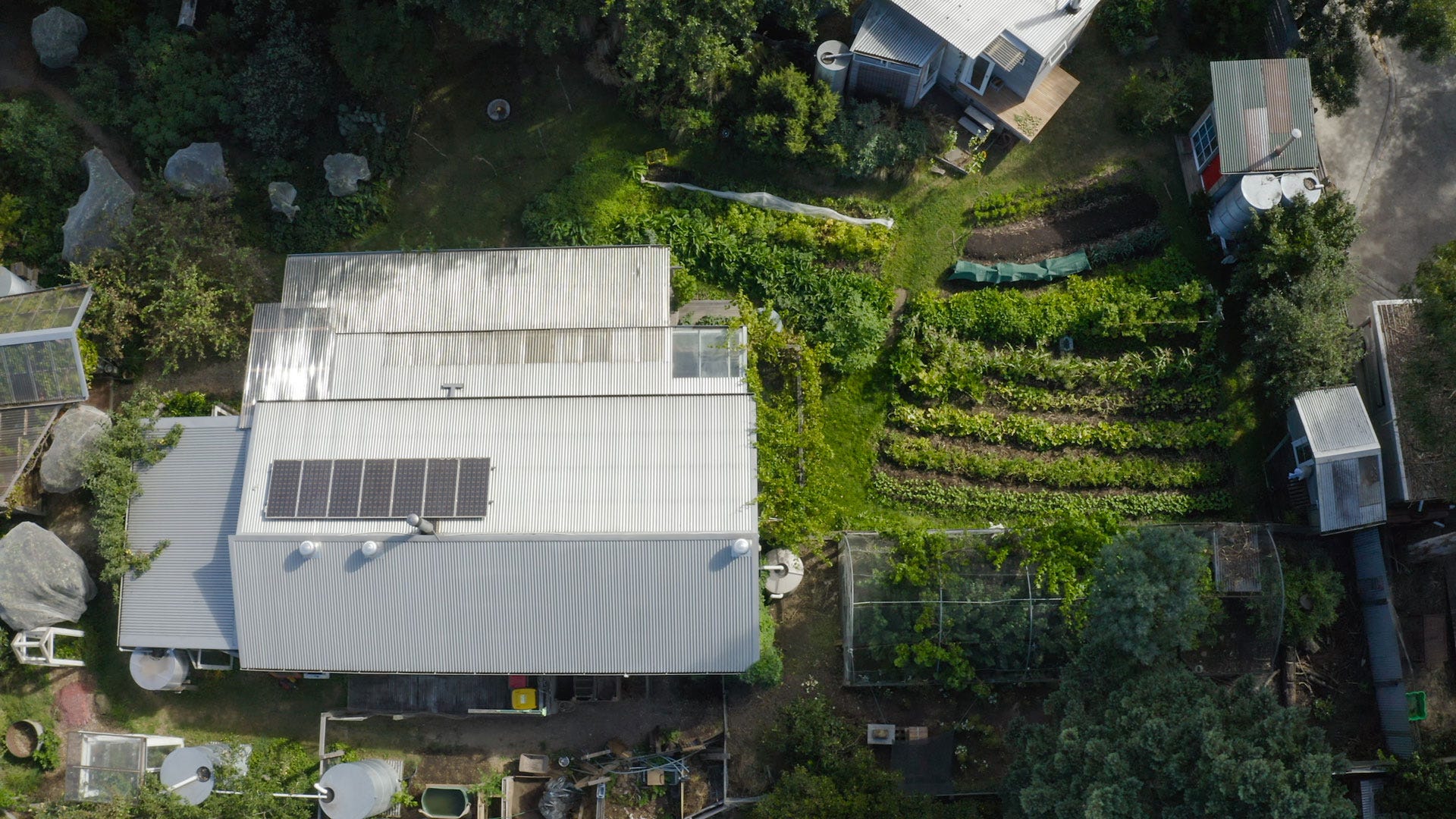
The .25 acre homestead
He’s a really good naturalist, great social critic, and strong advocate of living by high moral principles. I’ve long loved his account of his two years and two months living by Walden Pond, but I’ve always thought, ‘I’m not sure how well this translates from a young bachelor to a general plan for society.’
He observes that his fellow New Englanders were leading lives in bondage to their material needs and that “The mass of men live lives of quiet desperation.” A major aspect of his experiment in self-sufficiency was to see how he could minimize the amount of “Life” (time, energy, attention) he would have to exchange to make his living. He wanted to keep as much of his life for higher, spiritual, pursuits as possible.
He moves out to the pond on July 4, indicating it was his Independence Day. He provides a detailed accounting of his life there (including financial accounting- it cost him 28 dollars 12 1/2 cents to obtain the materials for the small cabin he built and to set himself up to start into raising a garden).
Even if so inclined, and even if well prepared, could we all follow the example Thoreau outlines for us? I have tended to answer ‘no.’ Even if we could, should we? Again, I’ve answered ‘no.’ Thoreau’s approach is too individualistic. Adding a wife and children to the mix (which is necessary for the species to survive) would throw the whole thing into a shambles. So, I surmised.
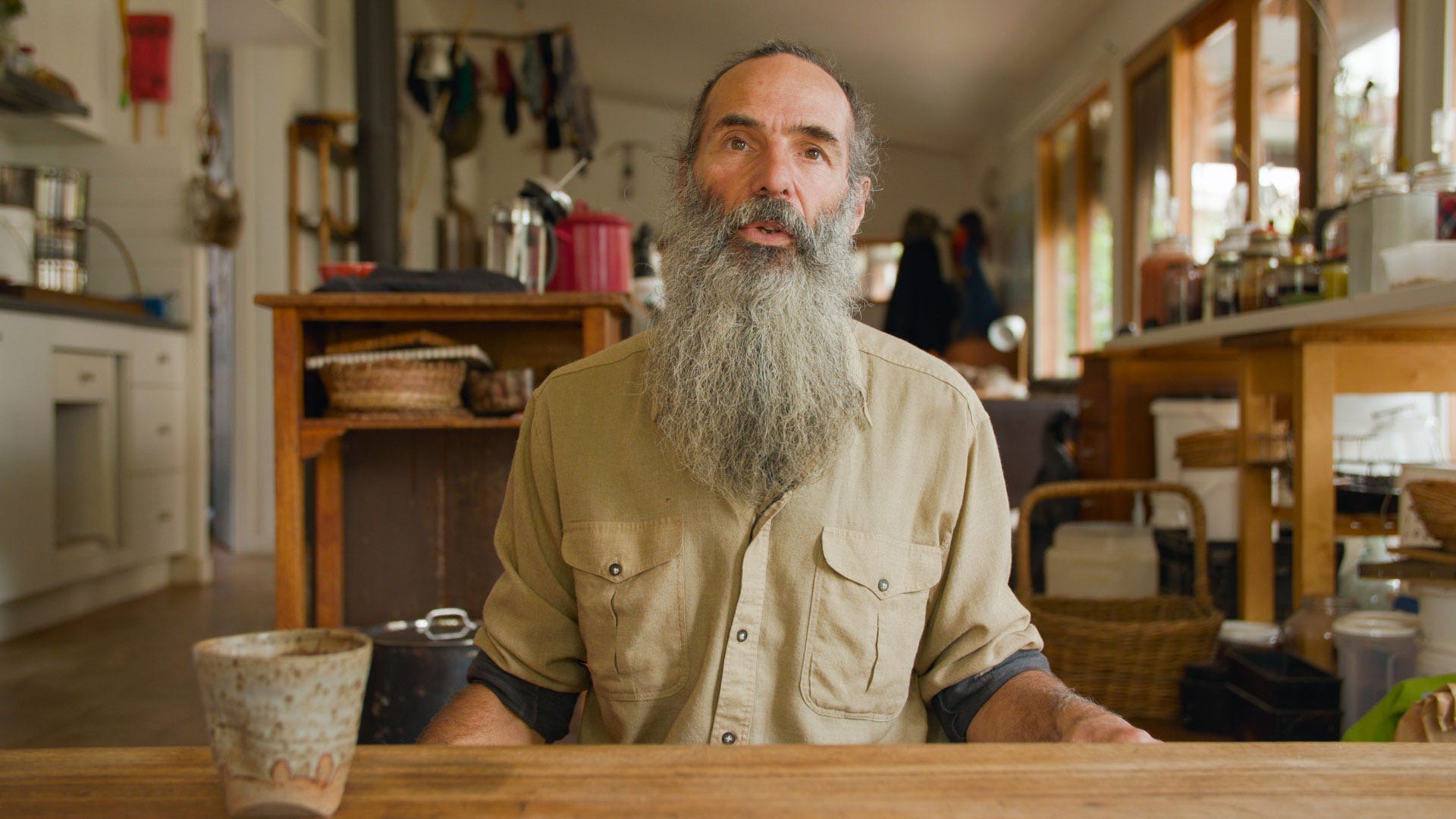
Patrick
With Thoreau in mind, it really struck me when the subjects of the film, most especially Meg, kept touching on Thoreauvian themes (I don’t think she was consciously doing that, I think it’s just that what they are trying to do and what Henry was trying to do have a lot in common).
She says they set out to get “time wealth [in exchange] for cash poverty.” That is, they set out to see how much of their time they could afford to buy back from the entanglements of the overarching economic machine. Essentially the way you do that is cut out the middleman. Learn how to make the stuff you would use money to buy to break the work-for-money-to-get-stuff-to-be-able-to-live cycle. If you grow/hunt/forage your food, you don’t need money for it. The same goes for medicine. If you make your clothes or buy thrift store, you don’t need much money for them. If you can produce your energy from firewood which you gather in the nearby forest, you don’t have to buy much electricity or gasoline (riding bikes comes into play there as well). They report that at this point (20 years in) they have extracted all of their time, except two days per week of Meg’s time, from the money economy. That’s a lot of freedom (which always has a price).
Meg describes the working to get money system as an “economy of meaninglessness.” Think about that. I do my job to get heat. I do my job to get food. I do my job to get transportation. I never actually produce heat, food, or transportation though. Somehow, magically, doing the one job gets all that. Of course, it does that by translating all labor and all other commodities into money which can be exchanged for anything. The whole virtue of money is that it is meaningless. It has no real connection to anything, but an artificial connection to every single thing. Meg and Patrick show how meaning comes from relating directly to what you are doing and how you go about provisioning for your needs.
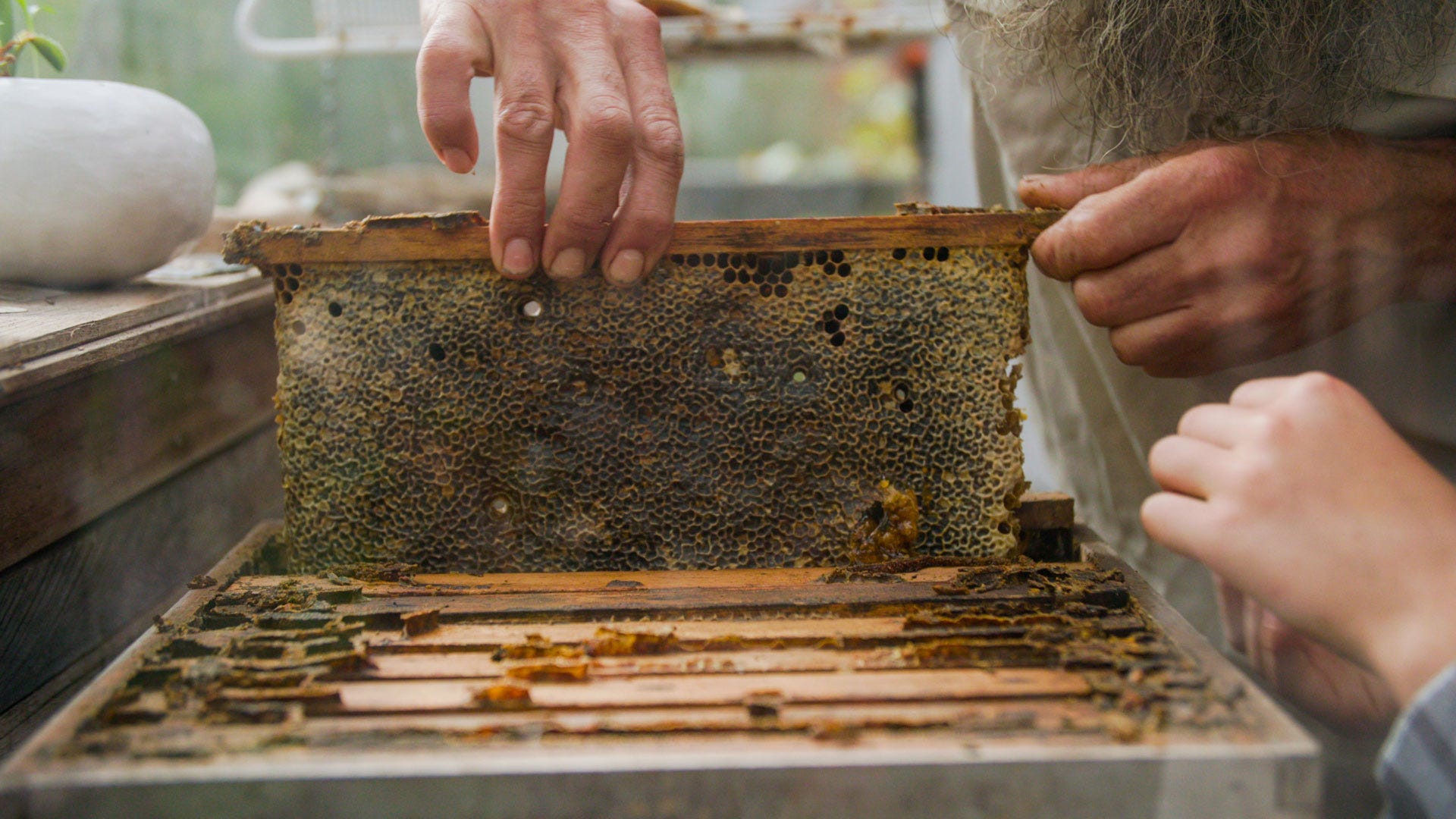
Honey harvesting. Patrick does not put on a bee suit and smoke them out of their hives; he explains what he is doing, why, and that he is leaving most of the honey for them to make it through the winter.
So far, this is pretty similar to Thoreau’s project about 175 years ago, except they are doing it as a family. They have 1/4 acre. Say that again: 1/4 acre is what they subsist and thrive on. That is some good economics. Of course, being peasants, they also rely on a commons. In this case, that is some public land and some land of the Native folks in their neighborhood on which they graze some sheep and goats and do that hunting. In exchange, they have developed a plan whereby the livestock provide the forest fire mitigation by eating up a good bit of the scrub and they only take the surplus animal population above what is needed to serve that function. They serve the commons and the commons serves them.
This family seems to have re-proven Thoreau’s points, but as a family. They also seem, to me, to avoid his errors. They perfect Thoreau. They do this by paying heightened attention to relationships.
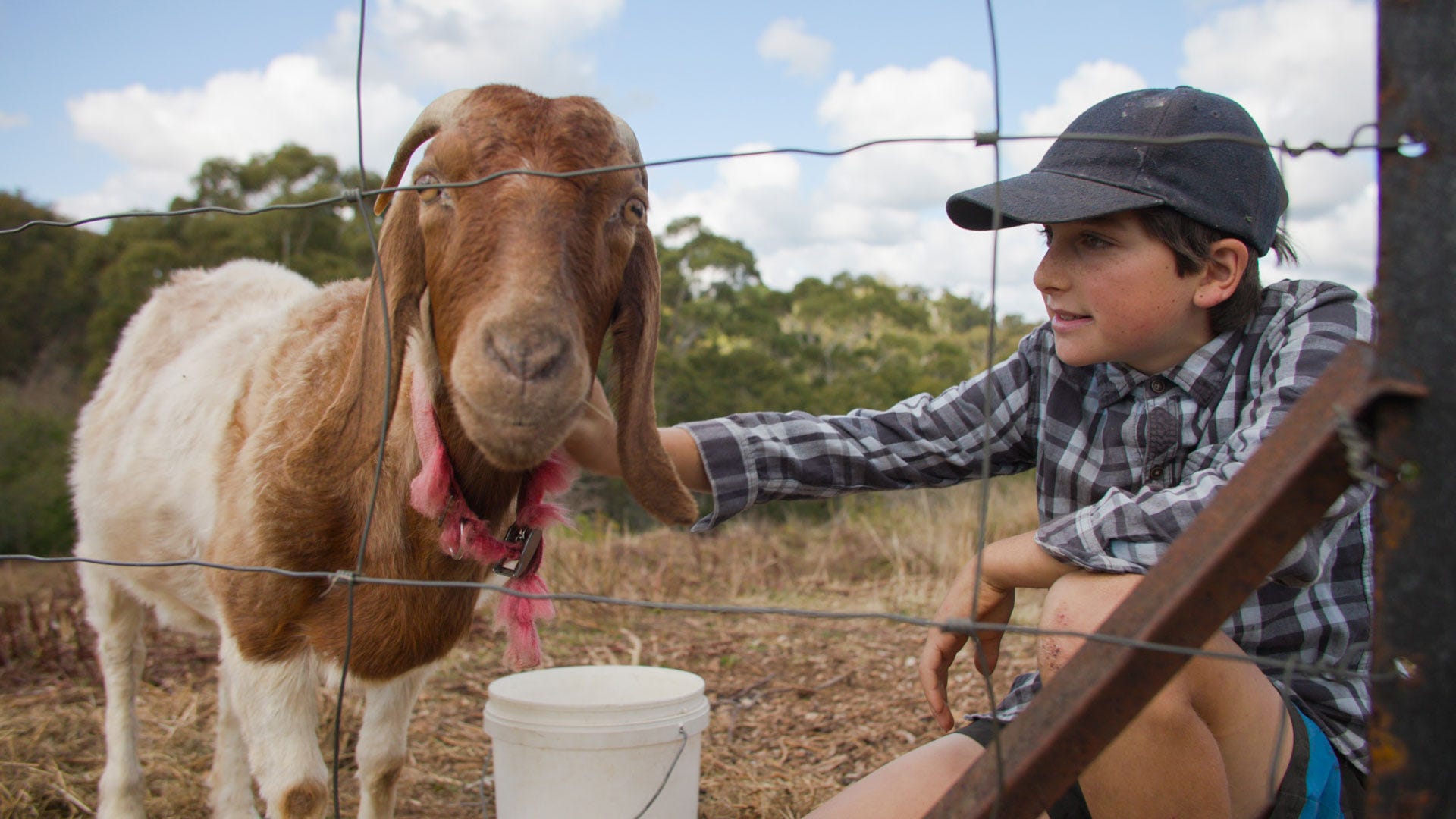
Woody and friend
Those relationships include the land and resources they utilize, which they hold sacred. Equally sacred is their relationship to one another and those in the local community. They are intentionally engaged in “village rebuilding.” This includes economic exchanges, largely on a gift economy model. School kids and others come to learn how to do things, spend time in the bush (you know, the woods), etc… In exchange, those folks gift them hand-me-downs, food items, leftover lumber, etc…. It also includes other various means of social life.
It also involves their relationships with the local Native folks and an attempt at ‘reindigination;’ that is, for white folks to learn how to live with the land and people on a nondomination basis again. I think that will sound weird to most people but is really important. A couple of centuries of industrial civilization have just about done us and the planet in. There are ways of living that left land and people ever stronger over the course of millennia. We should maybe relearn some of those ways.
What keeps coming to the fore through many examples is the notion of ‘relationship.’ The simple but profound dynamic involved in any relationship is one of exchange, of mutuality; a two-way process. The exact opposite of that is technique. Technique acts upon. Relationship acts with.
In terms of Thoreau, we are shown that relationships (social, spiritual, etc..) don’t wreck the experiment: they are the basis for the experiment’s ultimate success.
Is this a generalizable strategy? If you can support a family on a quarter of an acre, economically it is. Should we do it? Probably. Also, I’m probably not going to. You have to learn a bunch of stuff and work hard. But their example points out many truths. Maybe we can start by appropriating and living out a few of those. My garden is a little more thought out this year and my wife has devised this contraption for cucumbers to climb a trellis which makes them easier to pick and keeps the vines from crowding out other plants nearby. We experiment. Experiment in living. Its something.
So, I strongly recommend checking the film out. No doubt, you will get other things from it than I did. Also, it’s easy to subscribe to their Substack and keep up to date with them.
The film can be rented here for a small fee which will help the filmmakers recoup some of their expenses.
my family and i live a very similar life to these folks, my wife and two daughters live on 4.5 acres, in a 300 sq ft cabin that i built in rural BC. we are off grid and garden and raise or hunt or trade for most of our food. people idealize this life and it is romanticized in films and blogs like this. but the reality is or at least my reality is that with out a much larger outside economy creating the thrift clothes or scrap lumber or bee hives, and steel for the axe head and guns, and computer and solar panels and internet, socialized medicine etc etc...you are left with a very difficult life. can you actually imagine reverting to a time without the internet, (i am old enough to remember that time clearly and somewhat fondly) or the access to modern medicine. that being said i wouldnt trade mine for any other way of life. but my life as it is would not be possible without a larger outside modern economy. this idealization of the aboriginal life is lacking in the reality of what it would actually mean to live in the stone age. i dont disagree that the original peoples of the lands had great knowledge of their corner of the world but so did the european stone age peoples. there is certainly a lesson here that you can live with a lot less and that is a valuable lesson but until it is forced upon people the only people actually choosing a "harder" life will be those who dont find having less a problem, but an adventure...
Lovely piece WD. Did I ever share this? What we are doing in the Balkans: https://winteroak.org.uk/2025/01/27/about-this-life/ I can’t claim to be living the life as we live mainly in the uk and Spain but the spirit is very similar (including Thoreau!)